
Why Chocolate Is So Risky for Pets
Pets are experts at finding things they shouldn’t eat—countertops, backpacks, purses, holiday candy bowls—nothing is truly off-limits to a curious nose or paw. Unfortunately, some “treats” can be dangerous or even life-threatening.
One of the most common and serious examples? Chocolate.
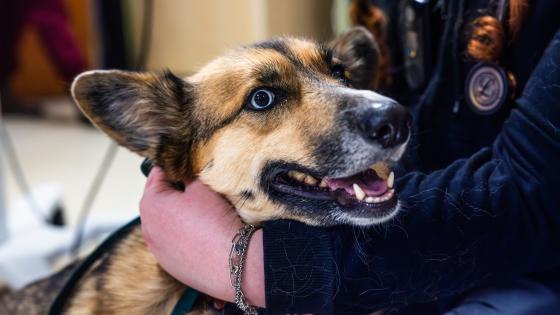
 Bodie knows this firsthand.
Bodie managed to eat an entire 70-ounce bag of semi-sweet chocolate chips in minutes. His family rushed him to DoveLewis, where he received immediate veterinary care, including induced vomiting to remove most of the chocolate, activated charcoal to absorb any remaining toxins (you can even see a little leftover charcoal on his cone!), IV fluids, and careful monitoring of his heart and vitals.
Thanks to his family’s quick action, Bodie never developed life-threatening symptoms and went home feeling like himself again—but his story could have ended very differently.
Why Chocolate Is Toxic to Pets
Chocolate contains theobromine and caffeine, stimulants that dogs and cats cannot metabolize efficiently. These compounds stay in the body much longer than in humans, allowing toxic levels to build up.
The darker and more concentrated the chocolate, the more dangerous it is:
- Cocoa powder & baking chocolate – extremely toxic
- Dark & semi-sweet chocolate – very dangerous
- Milk chocolate – still toxic, especially in large amounts
- White chocolate – low in theobromine, but still risky
While cats are less likely to seek out chocolate, any exposure is concerning and should be treated as an emergency.
What Chocolate Can Do
Chocolate affects multiple body systems:
- Heart: rapid or irregular heartbeat
- Nervous system: restlessness, tremors, seizures
- Gastrointestinal tract: vomiting, diarrhea, abdominal discomfort
Because theobromine can be reabsorbed and recirculated, symptoms can persist or worsen, which is why veterinary monitoring is recommended—even if a pet seems okay at first.
Signs of Chocolate Toxicity
Depending on the amount and your pet’s size, symptoms can appear 2–12 hours after ingestion:
- Vomiting or diarrhea
- Restlessness or agitation
- Rapid or irregular heart rate
- Tremors or muscle twitching
- Panting or fast breathing
- Seizures (in severe cases)
If you notice any of these signs—or even suspect chocolate ingestion—get your pet to a veterinarian immediately.
Bodie’s Outcome—and the Lesson He Leaves Behind
Because Bodie’s family acted quickly, his care—including decontamination, IV fluids, medications, and continuous heart monitoring—kept him safe. Not every pet is that lucky, which is why acting fast is critical.
What To Do If Your Pet Eats Chocolate (or Anything They Shouldn’t)
- Do not wait to see what happens.
- Call your veterinarian or an emergency hospital like DoveLewis immediately.
- Contact the ASPCA Animal Poison Control Center at (888) 426-4435 for guidance—they have 24/7 expert support.
- Do not induce vomiting at home unless instructed by a veterinary professional.
Prevention: The Best Protection
- Keep chocolate, candy, medications, and xylitol-containing products out of reach.
- Be extra cautious during holidays, baking, or celebrations.
- Remember: pets are faster and more resourceful than you think.
Bodie learned the hard way—curiosity is cute, chocolate is not! Quick action can help your pet stay safe if they get into something they shouldn’t.
Recent Posts

Halloween Pet Safety Tips
Fright night might be fun for humans, but it can be frightfully scary—and even dangerous—for pets. Veterinarians at DoveLewis want to remind pet owners to be mindful of the various ways Halloween can pose a threat to animals.