
Giving Jack Back His Comfort
Jack is only two years old. He is full of curiosity and energy, still very much a young dog discovering the world around him. So when he suddenly started yelping, freezing in place, and guarding his neck, his family knew something was seriously wrong.
 Imaging showed atlantoaxial (AA) luxation, a condition where the first two bones in the neck, the bones that connect the skull to the spine, become unstable and shift out of alignment. When that happens, the movement can press on the spinal cord, causing intense pain, weakness, or difficulty walking.
His scans also revealed a difference in skull shape at the base of his head, leaving less room for the brain and spinal cord to sit comfortably. While common in small breeds, this crowding can sometimes contribute to discomfort because of the limited space in that delicate area.
The imaging brought clarity, but it also brought difficult choices about the next steps.
His family chose surgery.
Jack's neurosurgeon, Dr. John Du, placed six small screws and medical-grade bone cement to stabilize the bones and protect his spinal cord. The goal was simple but powerful: stop the harmful movement and give his neck lasting support.
Healing took time and care.
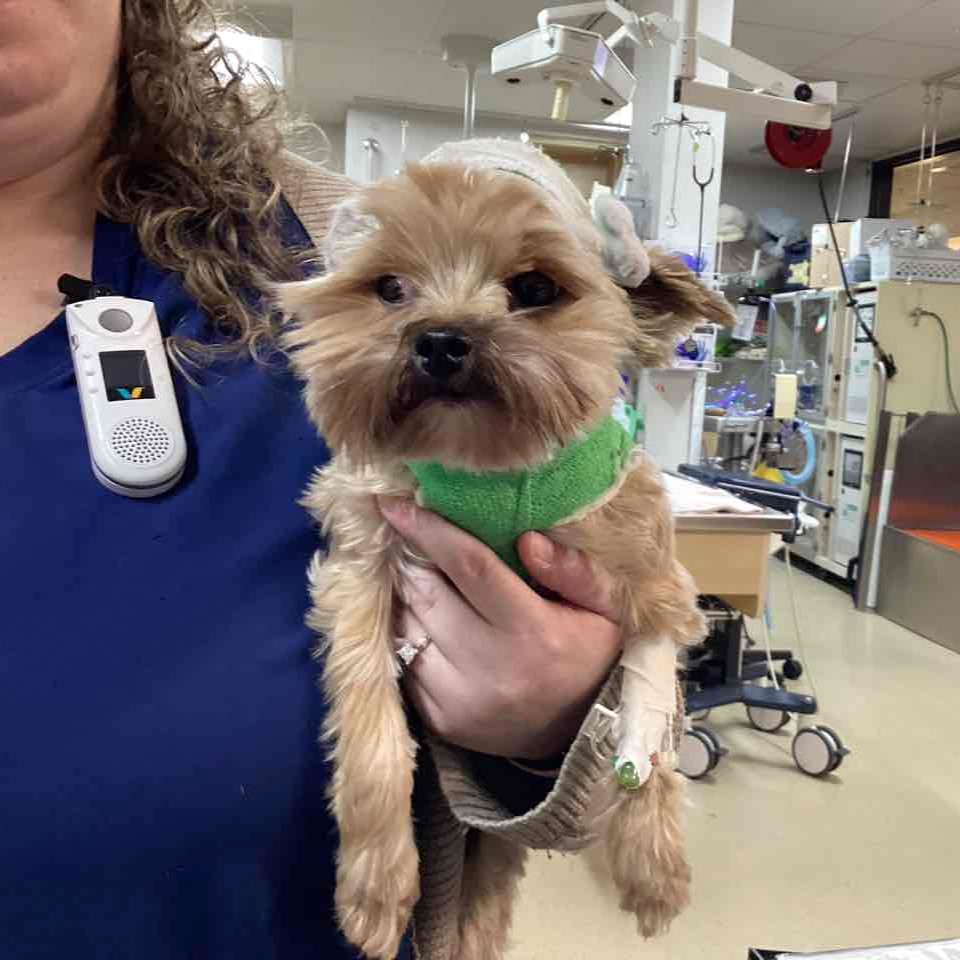
He rested under strict protection with a supportive bandage that functioned like a brace, limiting movement so his neck could heal safely.
And he healed beautifully.
His incision closed cleanly. His pain eased. The bandage came off. His muscles, temporarily weakened from rest, are expected to rebuild strength as he slowly returns to normal activity.
Jack now moves through his days bright, curious, and comfortable.
After everything he’s been through, he has stability again—and for a dog who once couldn’t lift his head without pain, that matters more than anything.