
Echocardiograms for Dogs and Cats
What Is an Echocardiogram, and Why Might My Pet Need One?
Your pet’s heart works hard every day, and sometimes it needs a little extra attention. An echocardiogram, or cardiac ultrasound, is a safe, non-invasive test that lets a veterinary cardiologist take a close, real-time look at your pet’s heart. Using high-frequency sound waves, it produces detailed images of the heart’s structure and function, helping your veterinarian understand exactly what’s going on inside that vital organ.
Your veterinarian may recommend an echocardiogram if an abnormality is seen on an X-ray, or if your pet is showing signs such as coughing, difficulty breathing, fainting, or the presence of a heart murmur.
How Does an Echocardiogram Help My Pet?
An echocardiogram gives veterinary cardiologists a clear view of the heart in action. It can help them assess:
- Heart size: Detecting enlargement that may indicate heart disease
- Wall thickness: Checking for abnormalities that could affect heart function
- Heart structure: Identifying any congenital or acquired structural issues
- Pumping efficiency: Measuring how well the heart circulates blood
Because heart disease in pets can develop gradually and sometimes without obvious symptoms, an echocardiogram can provide critical early insights, allowing for timely care and intervention.
What Can an Echocardiogram Detect?
This test can help identify a wide range of heart conditions, including:
- Congenital heart defects: Heart problems your pet is born with, which may affect how well their heart works.
- Heart murmurs: Unusual sounds your veterinarian can hear when listening to your pet’s heart, often caused by changes in blood flow.
- Valve problems: Damage or abnormalities in the heart valves that can make it harder for blood to flow properly through the heart.
- Heart failure (congestive heart failure): When the heart isn’t pumping efficiently, fluid can build up in the lungs or belly, making your pet tired or short of breath.
- Pericardial disease: Issues with the sac that surrounds the heart, which can affect how the heart moves and functions.
- Abnormal blood flow or clots: Blood may not flow normally through the heart, or clots can form, which can cause serious complications.
- Structural problems that may cause irregular heartbeats: Changes in the heart’s shape or structure that can lead to abnormal rhythms, which may make your pet weak, dizzy, or faint.
With this information, your veterinary cardiologist can craft a personalized care plan to keep your pet’s heart as healthy as possible.
What Happens During an Echocardiogram?
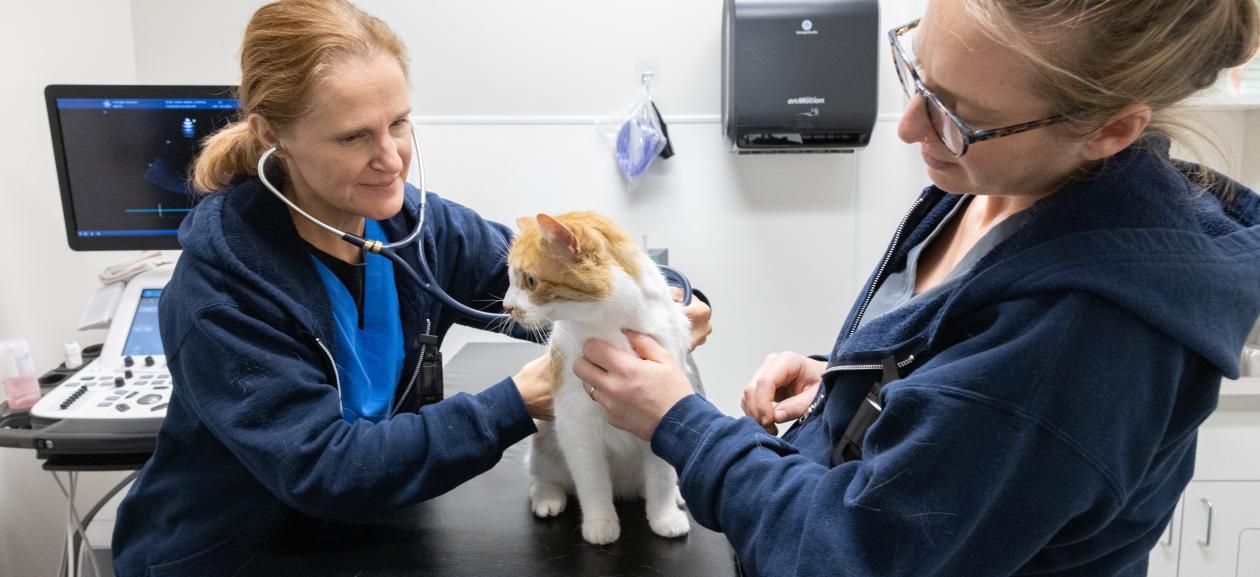
The procedure is gentle and painless. Most pets lie on their side while a small amount of ultrasound gel is applied to the chest. Sometimes a patch of fur may be shaved to ensure clear images. A handheld probe, called a transducer, is moved across the chest, sending sound waves that produce live images of the heart. These images help the cardiology team evaluate how well the heart is working and detect any abnormalities.
After the echocardiogram, your veterinarian or veterinary cardiologist will review the results with you and discuss the next steps. This may include monitoring, medication, or other treatments tailored to your pet’s needs.
Having an echocardiogram can give both you and your veterinarian peace of mind and a clear path forward, ensuring your pet receives the best care for their heart.
Schedule an appointment with DoveLewis Cardiology in Portland, Oregon