

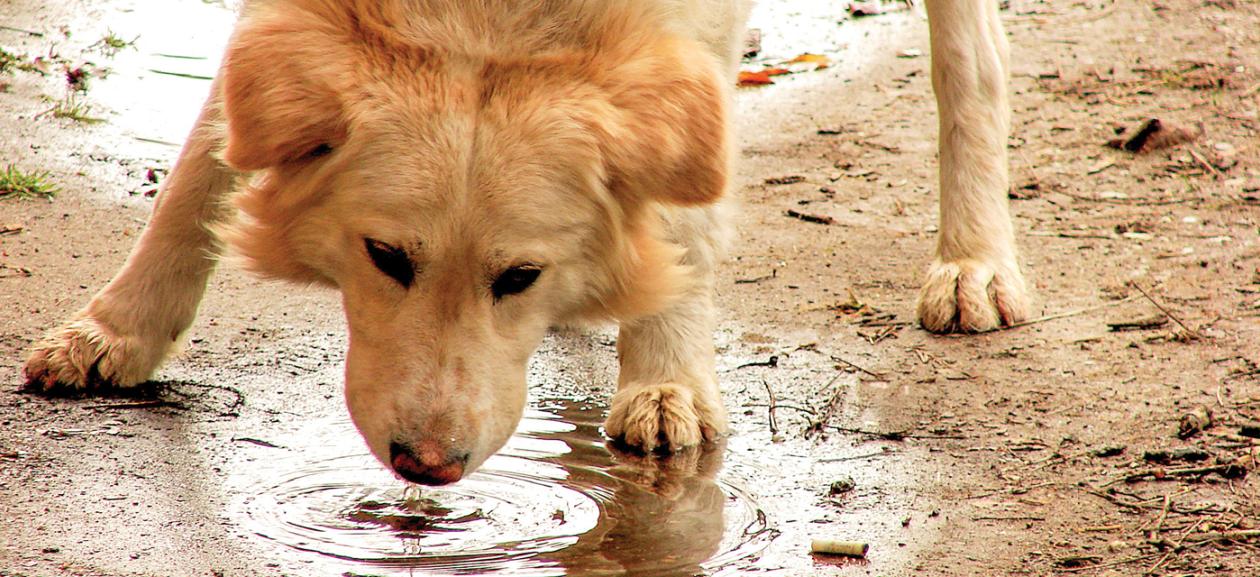
Rainy Season Pet Safety: Hazards, Tips, and Symptoms
As rainy season settles in, puddles, wet soil, and runoff from streets and lawns can expose pets to germs and harmful chemicals. A few simple precautions can help make rainy walks and backyard outings safer.
“Standing water can carry harmful chemicals from runoff or dangerous bacteria and parasites that can make your pets very sick,” says Dr. Hannah Marshall, Critical Care Specialist at DoveLewis. “During rainy weather, it’s essential to stay vigilant and be aware of the risks.”
Knowing what to avoid and when to call your veterinarian can help you enjoy rainy-day adventures more safely.
What Can Be Hiding in Puddles?
Leptospirosis
Leptospirosis, sometimes called “lepto,” is a bacterial infection that can seriously damage a dog’s kidneys and liver. Infected animals, including rats and raccoons, spread bacteria through urine that can contaminate water and soil.
Dogs can become infected by drinking contaminated water or when bacteria enter through cuts or the moist tissues around their eyes, nose, or mouth. Exposure can happen in neighborhoods, parks, and backyards. Cats can also become infected, although they rarely show signs of illness.
People can also get leptospirosis through contact with infected urine or contaminated water or soil. If your pet may have it, your veterinarian can explain how to clean up safely and protect others at home.
Giardia
Giardia is a tiny intestinal parasite spread through the feces of infected animals, which can contaminate water, soil, and surfaces. Pets can become infected by drinking contaminated water or licking contaminated paws or fur. Some show no symptoms, while others develop diarrhea, gas, or weight loss. Puppies and kittens are more likely to get sick.
The types of Giardia that infect dogs and cats usually differ from those that infect people, so transmission to humans is uncommon. Picking up pet waste promptly and washing your hands help reduce the spread.
Chemicals in Puddles and Runoff
Rain can wash vehicle fluids, lawn treatments, and other chemicals into puddles and drainage areas. Even clear water may contain something harmful. Antifreeze containing ethylene glycol is especially dangerous to dogs and cats.
If you think your pet has swallowed antifreeze or another poisonous substance, seek veterinary care immediately. Don’t wait for symptoms.
Simple Ways to Help Protect Your Pet
- Keep your dog’s leptospirosis vaccine current. It’s recommended as part of routine care for all dogs, including those in cities and suburbs. Dogs need an initial series followed by yearly boosters. Ask your veterinarian whether your dog is due, and continue avoiding potentially contaminated water.
- Bring fresh drinking water. Offer water during outings and discourage drinking from puddles, ponds, or drainage ditches.
- Choose your route carefully. Use a leash to avoid standing water, visible spills, and flooded areas. Stay away from deep or fast-moving water.
- Clean up after muddy outings. Rinse dirty paws and fur with clean water, then dry thoroughly to help remove material your pet might lick off.
- Check your yard and driveway. Empty containers that collect rainwater, pick up pet waste, store chemicals securely, and address vehicle leaks and spills promptly.
- Ask about parasite testing. Your veterinarian can recommend stool testing based on your pet’s age, symptoms, and activities. Report diarrhea that continues or keeps returning.
Symptoms to Watch For
Contact your veterinarian if you notice changes such as:
- Diarrhea that continues or keeps returning
- Vomiting, especially more than once
- Eating less or seeming unusually tired
- Drinking or peeing more or less than usual
- Stiffness, soreness, or reluctance to move
- Yellowing of the whites of the eyes or gums
These symptoms have many possible causes. Tell your veterinarian about any recent contact with standing water, floodwater, wildlife, or chemicals, even if it happened days earlier.
Seek emergency care right away for trouble breathing, collapse, seizures, severe weakness, or suspected poisoning. Repeated vomiting, inability to keep water down, or producing little or no urine also warrants prompt veterinary attention.
Rain comes with life in the Pacific Northwest. Bringing fresh water, avoiding standing water, and keeping vaccinations up to date can help make wet-weather outings safer for your pet.
DoveLewis is open 24/7 for emergencies. If you’re unsure whether your pet needs immediate attention, call us at 503-228-7281. Our team can help you determine next steps.

Recent Posts
Rainy Season Pet Safety: Hazards, Tips, and Symptoms
It’s that time of year when rain is the rule rather than the exception. With downpours frequently drenching our streets and backyards, the chances of encountering dirty puddles increases. And so do the hazards pets can face.
Halloween Pet Safety Tips
Fright night might be fun for humans, but it can be frightfully scary—and even dangerous—for pets. Veterinarians at DoveLewis want to remind pet owners to be mindful of the various ways Halloween can pose a threat to animals.
What To Do If Your Pet Eats Something Toxic
Many human foods are toxic to animals and can pose severe health risks if ingested. Let’s walk through some common foods that your furry friends should avoid and learn what to do if they accidentally indulge in something they can’t have.
